Beginners Guide

Understanding Rabbit Body Language
Beginners Guide

Understanding Rabbit Body Language

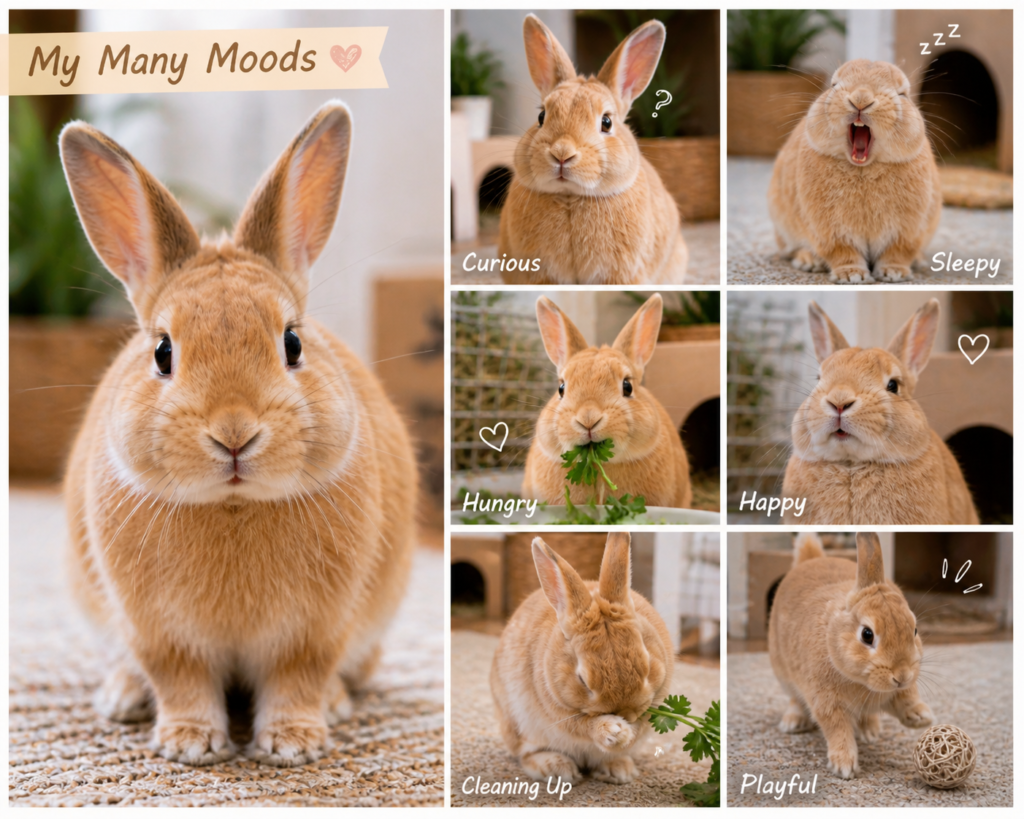
What does rabbit body language mean? Understanding rabbit body language involves interpreting non-verbal cues like ear positions, tail movements, and full-body actions (such as binkies or thumping) to determine a bunny’s emotional state. Since rabbits are silent prey animals, they use these physical signals to communicate happiness, fear, or illness to their owners. Have you ever wondered what your bunny is thinking? Unlike dogs who bark or cats who meow, rabbits are very quiet. They use their whole bodies to speak to us! Understanding Rabbit Body Language is the best way to make sure your pet feels safe and happy in your home. According to the House Rabbit Society, rabbits are “prey animals”. This means they are naturally shy. When we learn to “speak bunny,” we show them that they can trust us. In this guide, we will break down the jumps, the thumps, and the wiggles so you can become a rabbit expert. The Basics: Why Understanding Rabbit Body Language Matters Every rabbit communicates through a unique combination of ear angle, eye tension, body posture, and movement speed. No single signal tells the whole story — you must always read the full picture. In the US, many new rabbit owners get confused when their bunny suddenly thumps their feet or runs away. If you miss these signs, your bunny may become stressed, withdrawn, or even aggressive. When you master the art of Understanding Rabbit Body Language, you build a deeper bond and become the kind of owner your rabbit truly trusts. Happy and Relaxed: How to Know Your Bunny Loves You A happy rabbit is a joy to watch. Here are the most common signs that your bunny is having a great day: The Ultimate Ear Position Guide Rabbits have 18 muscles in each ear, allowing them to move them independently. Their ears are like radar dishes for their emotions. Tail Language: The Signal Most Owners Miss  Most rabbit owners focus entirely on ears and forget to watch the tail. A rabbit’s tail (called a “scut”) gives away their emotional state in ways the ears sometimes cannot. Learning to combine tail signals with ear signals gives you the full emotional picture of your rabbit’s inner world. On Alert: Understanding Curious and Cautious Behaviors Rabbits are very smart and like to investigate their room. Chinning: Why Does My Rabbit Rub Their Chin? You might see your rabbit rubbing their chin on furniture or your shoes. This is called Chinning. Rabbits have scent glands under their chins that humans cannot smell. When they do this, they are marking their territory and “claiming” you. It is a sign of a confident rabbit who feels at home — take it as a compliment. Warning Signs: When Your Rabbit is Angry or Scared If you see these signs, stop what you are doing and give them space: Summary Table: Rabbit Signs at a Glance Action What It Means Your Next Move Binky High excitement and joy Let them play! Flop Deep relaxation and trust Talk softly to them Thump Annoyance or fear Give them space Licking Affection and grooming You are family! The Freeze Extreme Terror Remove the stressor Chinning Marking Territory Let them “own” it Tail Up Confidence and playfulness Enjoy the Zoomies! Common Mistakes in Reading Rabbit Signals  When to Call the Vet: Illness Signals Rabbits hide pain well. Watch for these subtle changes: Frequently Asked Questions (FAQs) Q: Why does my rabbit nudge me with their nose? A: This means “Move out of my way!” or “Pet me now!” Rabbits are naturally bossy. Q: Why is my rabbit circling my legs? A: In intact rabbits, it is often hormonal mating behavior. In fixed rabbits, it simply means they are excited to see you. Q: Why does my rabbit thump at night? A: They hear things we cannot — a distant dog bark, a car backfiring, or a neighbor’s noise. They thump to warn you of a perceived threat, or sometimes just because they are frustrated that playtime is over. Q: Why does my rabbit lick the floor or walls? A: They may be exploring textures, tasting minerals, or showing they are bored and need more enrichment toys. Conclusion: Building a Bond Through Better Communication Understanding Rabbit Body Language takes time, but it is the most rewarding part of owning a pet. By watching their ears, tails, and noses together as a complete picture, you can tell exactly how they feel at any given moment. Whether they are doing a binky or giving you a “flick off,” every sign is a window into their heart. Now that you know how to “speak bunny,” take a moment today to sit on the floor and just observe your friend. Watch their ears, their tail, and the speed of their nose. What is your rabbit trying to tell you right now? By paying close attention to these cues every day, you will develop a deep bond built on real trust and communication — and you will have a happy, confident companion for many years to come. Share your stories in the comments below and help other new owners learn the language of bunnies!

Creating the Perfect Indoor Rabbit Setup
Beginners Guide

Creating the Perfect Indoor Rabbit Setup

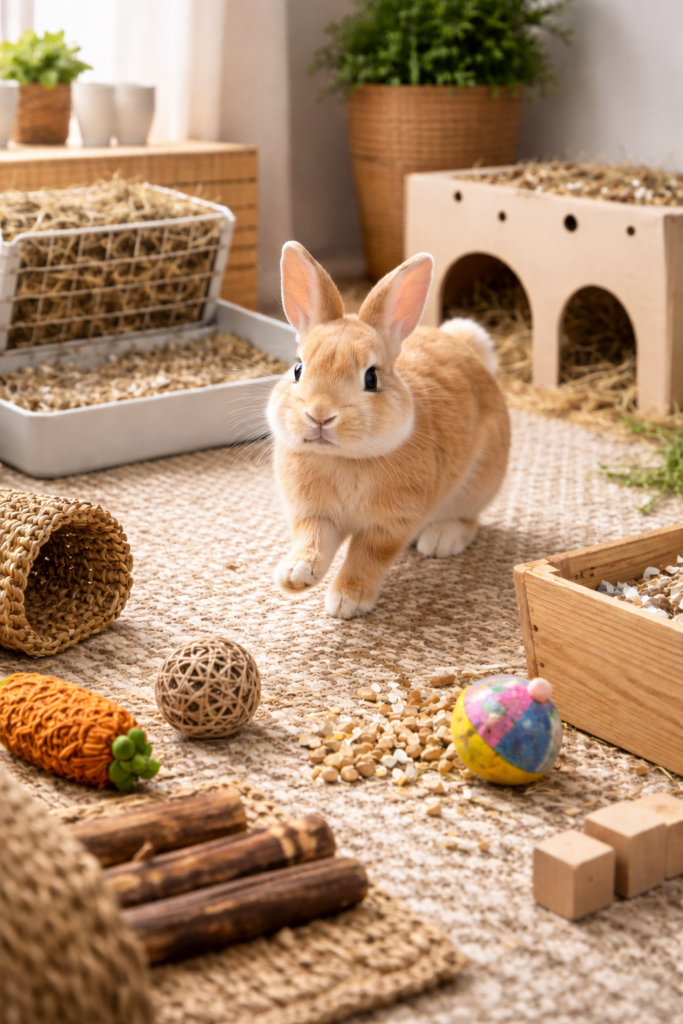
What is the best indoor rabbit setup? The perfect indoor rabbit setup is a safe, spacious environment that provides at least 16 to 24 square feet of space (typically using an exercise pen), non-slip flooring to protect joints, a dedicated litter and hay station, and total “bunny-proofing” of all electrical cords and baseboards. This setup mimics a rabbit’s natural habitat while integrating them into the family’s daily social life. In the United States, the way we live with bunnies has changed. Leading experts at the House Rabbit Society (rabbit.org) state that rabbits are social creatures who thrive best when living indoors as “house rabbits.” Keeping them inside not only protects them from extreme weather and predators but also allows them to live significantly longer—often reaching 10 to 12 years of age. Essential Components of an Indoor Rabbit Habitat A proper indoor rabbit habitat must include five non-negotiable elements: non-slip flooring for joint safety, a 16+ sq ft exercise pen, 24/7 hay access, at least one enclosed hideout, and full rabbit-proofing of all wires and baseboards. Without all five, the setup is incomplete. Step-by-Step: Creating the Perfect Indoor Rabbit Setup Step 1: Choosing the Right Location The best spot for a rabbit is a quiet corner in a room where the family spends time, like a living room or a home office. According to the House Rabbit Society, rabbits are “creatures of habit” and feel most secure when they can observe family life without being in the middle of a high-traffic zone like a busy kitchen. Step 2: Selecting the Base (X-Pen vs. Cage) The “Perfect Setup” usually begins with a 36-inch high exercise pen (X-pen). Cages are often too small and can cause “cage aggression.” An X-pen gives them enough room to do three consecutive hops, which is the minimum physical requirement for their muscle health. Step 3: Setting Up the Feeding Station Your rabbit should have 24/7 access to fresh Timothy hay. In your setup, place a heavy ceramic water bowl (bowls are better than bottles as they allow more natural hydration) and a small ceramic food dish for high-quality pellets. Step 4: Creating a “Safe Zone” Hideout Every rabbit needs a place to hide when they feel scared or sleepy. A simple cardboard box with two holes cut out (an entrance and an exit) is perfect. This “two-door” rule is vital because rabbits feel trapped if a box only has one opening. Step 5: Rabbit-Proofing (The Most Important Part) You cannot have a successful indoor setup without “bunny-proofing.” Temperature Safety: The “Rabbit Comfort Zone” Rabbits are much more sensitive to heat than they are to cold. Because they cannot sweat or pant effectively, they rely on their ears to regulate temperature. Toxic Plants Warning List Many common US houseplants are “bunny-toxic.” If you are planning a free-roam setup, ensure these are completely out of reach: Social Bonding: Why Two is Better Than One The House Rabbit Society emphasizes that rabbits are happiest when they have a companion of their own species. If your indoor setup allows for it, consider a bonded pair. Common Mistakes to Avoid in Your Setup Even with the best intentions, new owners often make these three common errors: Cost Estimate Table: First-Year Setup Item Estimated Cost (USD) Why It’s Needed Exercise Pen (36″) $40–$60 The main “home” base Low-Pile Area Rug $20–$50 Traction and foot protection Large Litter Box $10–$20 For litter training success Ceramic Bowls $15 Durable and hard to flip Hay Rack/Feeder $15–$25 Keeps hay clean and off the floor Cord Protectors $10–$20 Safety from electrical shocks Total Initial Cost $110–$190 A long-term investment in safety Enrichment and Mental StimulationA bored rabbit is a destructive rabbit. According to the House Rabbit Society, environmental enrichment is essential for preventing stress behaviors like bar-biting and destructive chewing. Include at least three types of enrichment in your setup and rotate them weekly to keep the environment fresh: The “Free-Roam Graduation” Checklist Most owners want their rabbits to have full run of the house. However, you must “graduate” them slowly to ensure they don’t lose their litter box habits or destroy your home. Signs Your Setup Is WorkingAfter two weeks, your setup should be producing these three clear behavioral checkpoints: Maintenance: Keeping the Space Clean “Spot clean” the litter box every day. Replace the hay and check for any damp spots on the rug. Once a week, do a deep clean using a 50/50 mixture of white vinegar and water. This natural solution is recommended by the House Rabbit Society because it effectively dissolves calcium in rabbit urine without using harsh chemicals. FAQs Q: Can I keep my rabbit in a bedroom? A: Yes! Bedrooms are great because they are usually carpeted and quiet. Just make sure you bunny-proof under the bed. Q: My rabbit is biting the X-pen bars. Why? A: This is usually a sign they want more “out of pen” time or they are bored. Add a new enrichment toy and increase floor time. Q: Do indoor rabbits need sunlight? A: Yes, natural light helps their internal clock, but never leave a rabbit in a setup where they cannot escape direct, hot sun. Conclusion Creating the Perfect Indoor Rabbit Setup is a journey of observing your pet and adjusting to their needs. By following the five-step guide, the “Graduation Checklist,” and the three behavioral checkpoints, you are giving your rabbit a world-class home. The right flooring, a spacious X-pen, real enrichment, and a temperature-controlled, bunny-proofed environment will transform your rabbit from a nervous newcomer into a confident, binkying, and deeply affectionate member of the family. Invest in the setup once — enjoy the bond for up to 12 years.

11 Signs Your Rabbit is Happy and Healthy
Beginners Guide

11 Signs Your Rabbit is Happy and Healthy

What does a happy and healthy rabbit look like? A happy and healthy rabbit is an active, curious, and alert animal that displays relaxed body postures (like flopping), engages in vigorous physical outbursts (like binkies and zoomies), maintains a consistent appetite for hay, and produces regular, round, dry fecal pellets. Understanding these behaviors is the key to providing high-quality care for your long-eared companion. In the United States, rabbit care has evolved significantly. According to recent surveys by house rabbit societies, owners are moving away from outdoor hutches and toward “free-roaming” indoor lifestyles. This change allows owners to better observe the 11 Signs Your Rabbit is Happy and Healthy, ensuring their pets live longer, more fulfilled lives. The Physical Indicators of a Healthy Rabbit Before we dive into the fun behaviors, let’s look at the “Technical Specs.” A healthy rabbit should look “polished” and well-maintained. 11 Signs Your Rabbit is Happy and Healthy 1. The Iconic Binky The “Binky” is the ultimate gold standard of rabbit happiness. This is when a rabbit leaps into the air, twists their body, and kicks their feet out. It looks like a burst of pure energy! If your rabbit is binkying, they are feeling pure joy and safety. 2. The “Flop” of Contentment Imagine your rabbit is standing still, and suddenly, they throw themselves onto their side as if they just fainted. This is called “The Flop.” It means they feel 100% safe in their environment. A scared rabbit would never expose their belly like that. 3. Tooth Purring (The Bunny “Vibe”) Did you know rabbits “purr”? It’s not a throat sound like a cat. Instead, they lightly grind their teeth together. You can feel it if you pet their head. It’s a sign of deep relaxation and comfort. Note: Loud, harsh tooth grinding is different—that usually means they are in pain. Look for the soft, vibrating “chatter.” 4. Active Grooming Habits A happy rabbit is a clean rabbit. They spend a large part of their day licking their paws and cleaning their ears. Even better? If they start licking you or another bunny friend, it’s a sign of “social grooming”—the highest form of bunny love. 5. Curious Exploration Healthy rabbits are naturally “nosey.” They want to “chin” everything (marking territory with scent glands) and explore new boxes or tunnels. If your rabbit is sitting in a corner all day and doesn’t want to move, they might be feeling under the weather. 6. The “Bunny Nose” Rhythm A rabbit’s nose is like a mood meter. A fast-twitching nose usually means interest or excitement. When they are sleeping, it might slow down significantly. A healthy nose is always moving when they are awake and alert. 7. Healthy Appetite and “Pellet” Consistency In the rabbit world, digestion is everything. A healthy rabbit produces small, round, dry fecal pellets. If the appetite drops or the droppings stop, it’s an emergency. A happy bunny will always get excited for their morning pellets or fresh cilantro. 8. Seeking Social Interaction While some rabbits are shy, a happy house rabbit will often follow you around or nudge your ankles for attention. They are social creatures that thrive on company and “interspecies” friendship. 9. Relaxed Sleeping Postures A healthy rabbit will sleep in various positions. The “Loaf” (tucked in like a loaf of bread) is common, but the “Superman” (stretched out with back legs behind them) shows they are totally relaxed and confident in their home. 10. Playing with Toys Whether it’s tossing a plastic key ring, shredding a cardboard box, or digging in a safe dig-box, playfulness is a sign of a sharp, healthy mind. Boredom can lead to depression, so a playing bunny is a happy bunny. 11. The Zoomies (Rapid Running) If you see your rabbit suddenly sprint across the room at top speed, zig-zagging between furniture, they have the “Zoomies.” This is a sign of high energy and peak physical health. It shows they have the muscle strength and the mental comfort to “let loose.” The Dark Side: Signs of an Unhappy or Stressed Rabbit To truly understand a happy rabbit, you must recognize the signs of an unhappy one. Rabbits are very sensitive to their environment. Rabbit Health Checklist: At a Glance Feature Healthy Sign Warning Sign Appetite Eats hay constantly Refuses food for >8 hours Activity Binkies, runs, explores Hiding, hunched up, lethargic Droppings Round, dry fecal pellets Small, misshapen, or none Body Lean but muscular Bony spine or obese Posture Flopping, stretching Constant shivering or tensing Modern Rabbit Care: What the Experts Say According to the House Rabbit Society (rabbit.org), indoor rabbits who are properly cared for can live 8 to 12 years—significantly longer than those kept in traditional outdoor hutches, where exposure to predators and extreme weather poses a constant threat. Keeping your rabbit indoors allows you to better monitor their health and build a stronger social bond. Furthermore, AVMA (American Veterinary Medical Association) guidelines emphasize that environmental enrichment is a necessity, not a luxury. Providing a variety of high-fiber hay, such as Timothy or Orchard grass, is the primary recommendation for preventing dental disease and GI issues. Modern owners in the US are increasingly adopting “free-roam” or “exercise pen” setups, as research shows that rabbits with more space to run exhibit fewer stress-related behaviors like bar-biting or lethargy. When to Call the Vet: The Emergency Checklist Because rabbits are prey animals, they hide illness until it is very advanced. You must act fast if you see these signs: FAQs Q: How do I know if my rabbit is lonely? A: If your rabbit is biting their cage bars, overeating, or becoming aggressive, they might be lonely. Rabbits are social and often do best in bonded pairs. Q: Why does my rabbit nudge me with its nose? A: This is bunny-talk for “Hey! Pay attention to me!” or “Move out of my way!” Usually, it’s a request for pets. Q: Do rabbits need to go to the vet even if they look

Scroll to Top