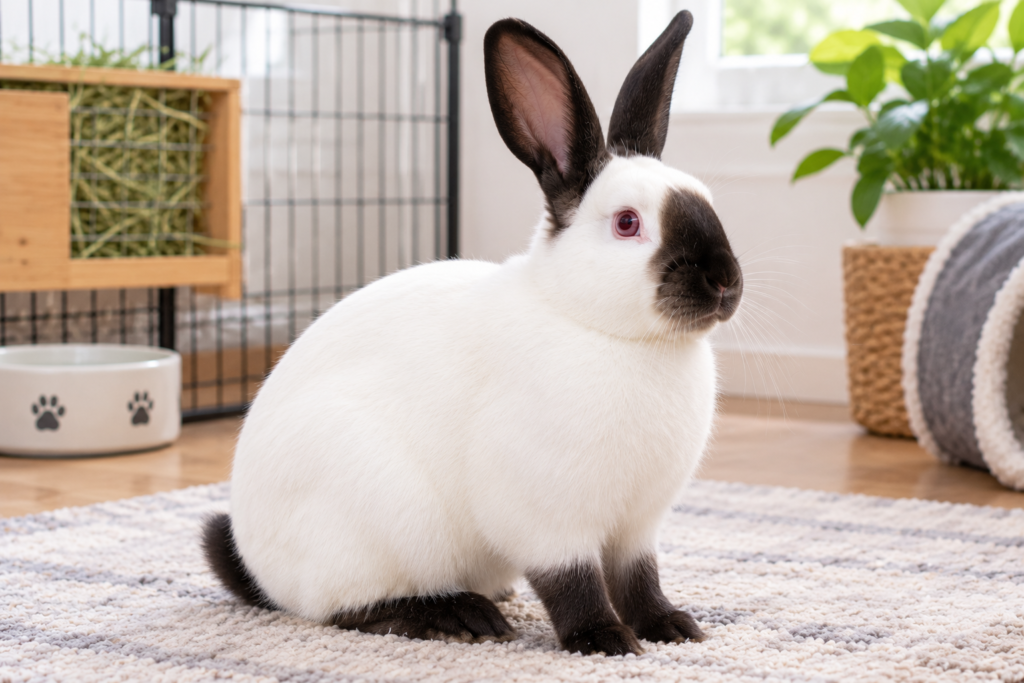
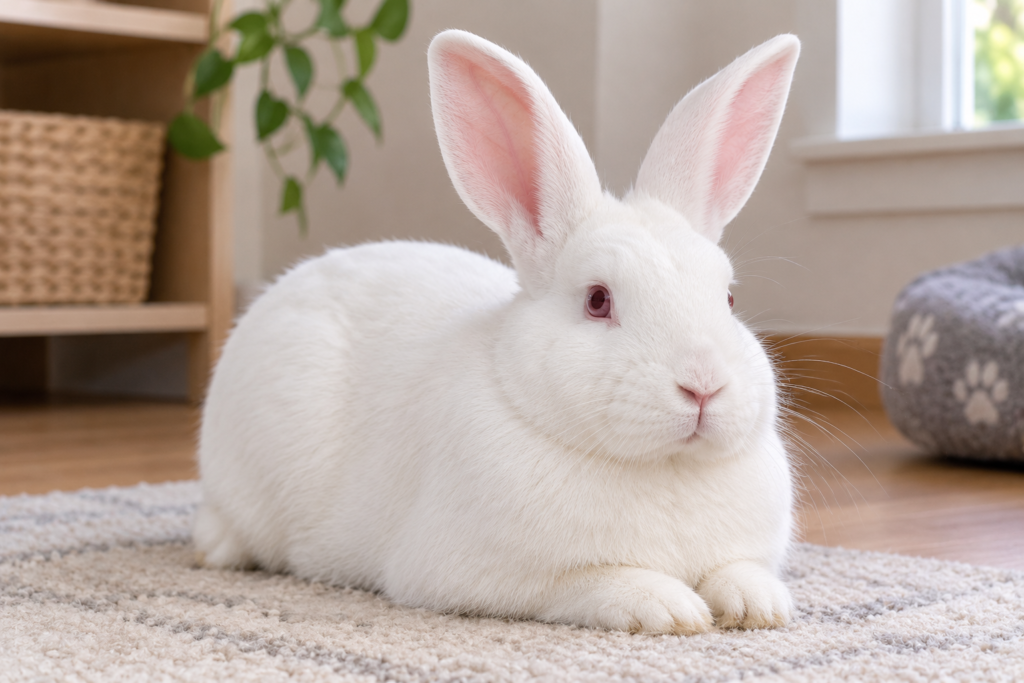
Flemish Giant Rabbit: The Complete Care Guide for Owners
The Flemish Giant rabbit is one of the largest and most gentle rabbit breeds in the world. Weighing 15–22+ pounds and stretching up to 4 feet in length, this breed is truly impressive. But behind that size is a calm, patient, and affectionate animal that bonds deeply with its owners. Whether you are a first-time rabbit owner or an experienced keeper, this guide covers everything you need to know about Flemish Giant rabbit care from housing and diet to health, bonding, and monthly costs. Quick Facts at a Glance The Flemish Giant rabbit is a large domestic breed originating from Belgium, known for its calm temperament and suitability as a family pet. Here is a snapshot of the key facts every owner should know before bringing one home. Feature Details Average Weight 15–22+ pounds (adult) Body Length Up to 4 feet when fully stretched Lifespan 8–10 years with proper care Temperament Gentle, calm, patient, social ARBA Recognized Colors Black, Blue, Sandy, Fawn, Light Gray, Steel Gray, White Minimum Enclosure Size 10 × 4 × 4 feet (converted shed preferred) Daily Exercise 3–4 hours minimum outside enclosure Monthly Cost (Est.) $80–$180 USD (see breakdown below) Best For Families with space; calm, attentive owners Not Ideal For Small apartments; households with toddlers What Is a Flemish Giant Rabbit? The Flemish Giant is a giant domestic rabbit breed originally developed in Belgium in the 16th century, primarily for fur and meat. Today it is kept almost exclusively as a companion animal and show rabbit. Adults typically weigh 15–22 pounds, reach 2.5–4 feet in body length, and live 8–10 years. They are often called the ‘Gentle Giant’ due to their docile, sociable temperament. The breed was exported to England in the mid-1800s and later arrived in America, where it became foundational to many modern domestic rabbit breeds. The American Rabbit Breeders Association (ARBA) officially recognizes seven color varieties. Size, Weight & Appearance Flemish Giants are among the largest rabbit breeds in the world. According to the Guinness World Records, the longest Flemish Giant rabbit on record measured 4 feet 3 inches (1.3 meters). Most adults fall in the 2.5–3 foot range and weigh between 15–22 pounds, though show-quality males can exceed that. Their physical characteristics include: • Large, muscular body with a semi-arched back • Thick, glossy fur with a dense undercoat roll-back effect when stroked • Long, upright ears typically 5–6 inches in length • Broad hindquarters and powerful back legs built for speed and sudden movement • Bold, expressive eyes set wide on the face — a distinctive feature of the breed • Females often have a large dewlap (fold of skin under the chin) • Males typically have a broader, more prominent head than females Size Comparison: Flemish Giant vs. Other Giant Breeds Breed Avg. Weight (lbs) Avg. Weight (kg) Belgian Hare 6–10 lbs 2.7–4.5 kg French Lop 10–15 lbs 4.5–6.8 kg English Lop 12–15 lbs 5.5–6.8 kg Flemish Giant 15–22+ lbs 6.8–10 kg Continental Giant 15–17+ lbs 7–8+ kg Flemish Giant Temperament & Personality The Flemish Giant is widely regarded as one of the most people-friendly rabbit breeds. Owners frequently describe them as behaving more like dogs than rabbits they will follow you from room to room, nudge your hand for attention, and even bring toys to you. Typical personality traits include: • Gentle and patient — rarely aggressive when handled correctly • Sociable — actively seeks human interaction and companionship • Intelligent — can learn litter training and simple routines within weeks • Loyal — many Flemish Giants bond most strongly with one primary person • Quiet — the most common sounds are foot-thumping when annoyed or soft grunting at mealtimes Important note on handling: Despite their friendly nature, Flemish Giants do not enjoy being picked up. Their sheer size and weight make improper lifting dangerous — for both the rabbit and the handler. A rabbit that feels unsupported may thrash violently, risking spinal injury. Always support the full body and hindquarters when lifting. They are generally well-suited to households with older children (ages 8+) who understand how to interact calmly. Very young children may struggle with the rabbit’s size and inadvertently frighten or mishandle them. Socialization note: For friendly personality traits to develop fully, kittens must be handled gently and frequently from a young age. A Flemish Giant raised with minimal human contact can become defensive and difficult to handle as an adult. Housing & Space Requirements The Flemish Giant rabbit needs significantly more space than the cages sold for standard rabbit breeds. A minimum enclosure size of 10 × 4 × 4 feet is recommended large enough for three consecutive jumps, space to stretch out fully, and room to stand upright on hind legs. Suitable housing options include: • Converted garden shed — the most recommended option for pairs; attach a secure outdoor run for grazing access • Large aviary or walk-in pen — good airflow, customizable size; add predator-proof perimeter fencing for outdoor setups • Dedicated indoor room — ideal for bonded pairs; remove electrical wiring and block access to the rest of the house • Extra-large dog crate — acceptable as a temporary solution only; cover all wire flooring with solid matting to prevent sore hocks Flooring matters: Wire or hard flooring causes a painful condition called sore hocks (ulcerative pododermatitis). Always use soft rubber mats, fleece liners, or straw bedding as the base surface. Exercise: Flemish Giants need a minimum of 3–4 hours of supervised free-roaming time outside their enclosure every day. Without this, they can develop obesity, boredom-related destructive behavior, and GI problems. Indoor vs. outdoor: Indoor housing is increasingly preferred by veterinarians and experienced keepers. It protects rabbits from temperature extremes (they are extremely heat-sensitive above 80°F/27°C), predators, and fly-strike in warm months. Flemish Giant Diet Plan A Flemish Giant rabbit’s diet should consist of 80% high-quality grass hay, supplemented by fresh leafy greens, measured pellets, and unlimited fresh water. Because of their large body mass, they consume significantly more than